Research Focus
Tropical cyclones represent a major societal challenge in the context of climate change. Rising sea levels combined with increasingly intense cyclones highlight the growing need for a better understanding of the mechanisms driving tropical cyclone intensification. In my research, I address these questions both in terms of cyclone intensification (internal structure and interaction with the environment) and impacts, particularly regarding coastal flooding associated with storm waves.
-
Dynamics of Tropical Cyclones (TC)
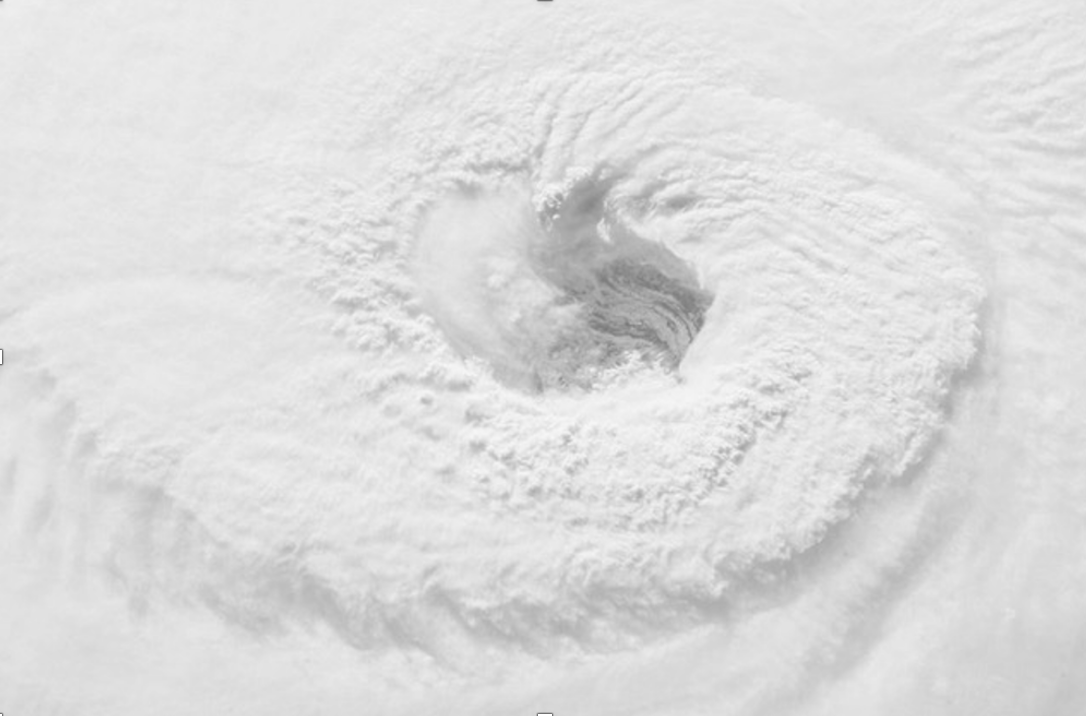 One aspect of my research focuses on the dynamics of eye formation in TCs. Despite being ubiquitous in TCs and playing a key role in their intensification, the formation mechanism of the eye remains debated within the community. I also study the interaction of tropical cyclones with their atmospheric environment, particularly the effect of vertical wind shear. My approach uses idealized models to extract the underlying physical mechanisms. Photo: Hurricane Florence (2018), ISS, A. Gerst.
 -
Ocean-Atmosphere Coupling and Extreme Waves
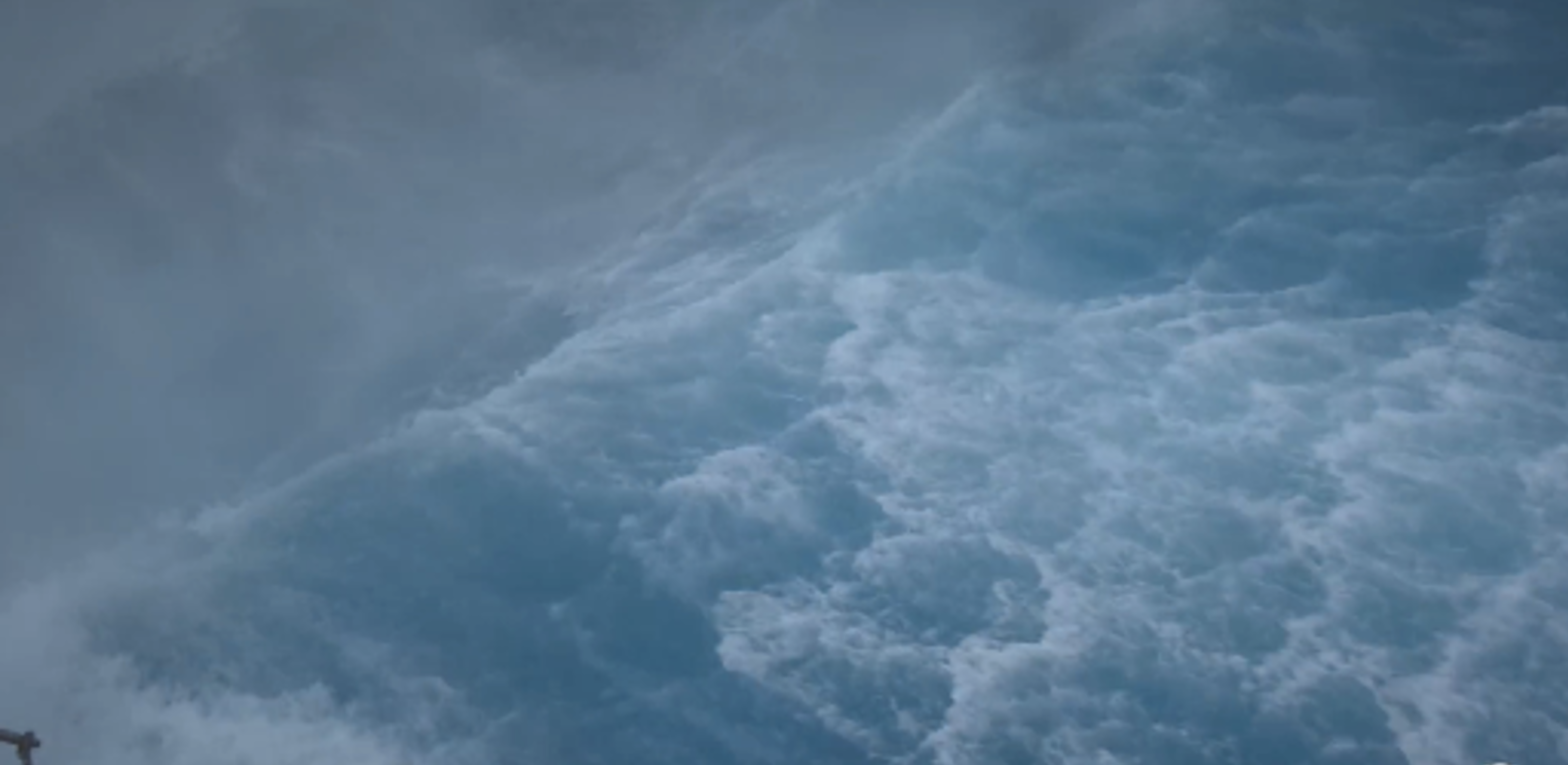 Ocean-atmosphere coupling plays a major role in TC formation. One aspect of the TC-ocean interaction concerns the storm waves generated during a cyclone's passage. The mechanisms leading to extreme waves, which can be particularly destructive, remain an active research topic. Our work relies on numerical modeling, wave energy spectra reconstructed from the SWIM instrument onboard the CFOSAT satellite, and in situ measurements. Photo: Immersion during Hurricane Sam, 2021 (Saildrone/NOAA).
 -
Impact of Waves on Islands
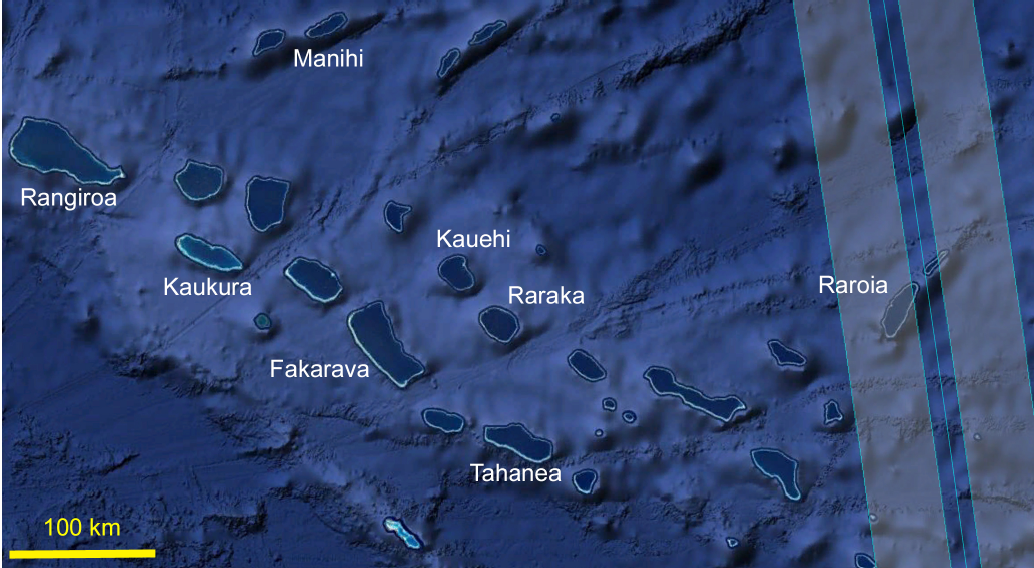 I am also interested in the impact of extreme waves on high islands and atolls. Waves from the open ocean hitting a reef barrier are partially dissipated and partially transmitted to the lagoon. Studying this transmission and the most dangerous waves during a cyclone is an open question. The study of waves transmitted to the lagoon during strong offshore swells highlights the existence of large-scale resonance modes, also called “seiches.” Figure: Rebouillat, Oruba et al., 2026.
Other Research Topics
Previously, I studied the mechanisms of formation and movement of mid-latitude storms as well as the magnetohydrodynamic (MHD) flow of the Earth's liquid core, which generates the Earth's magnetic field.
-
Scaling Laws for Rotating Flows and the Geodynamo
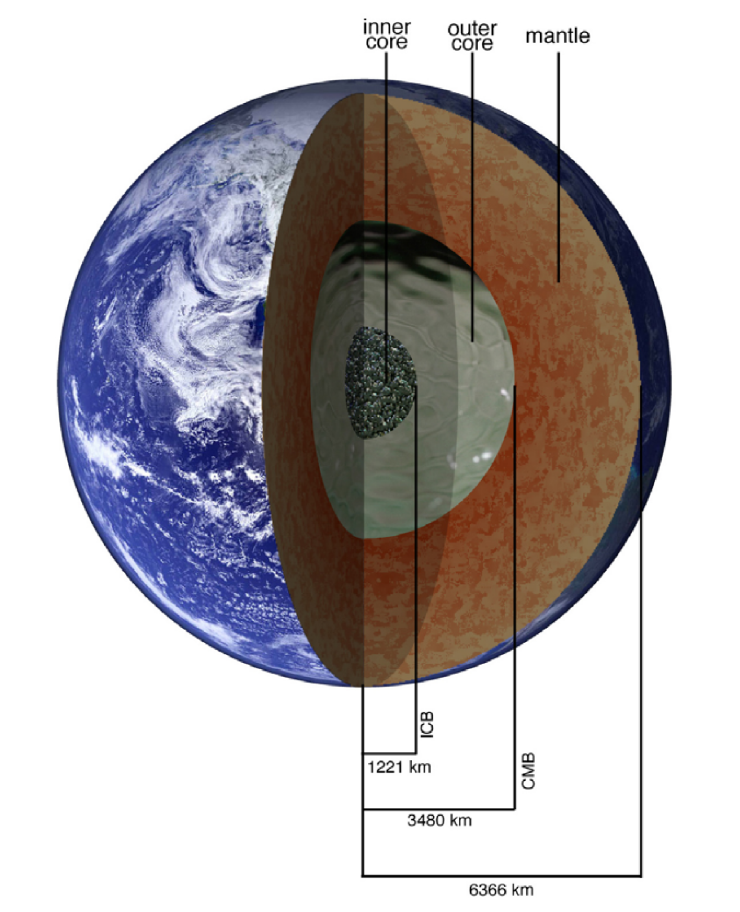 The flow of weakly viscous geophysical fluids influenced by the Earth's rapid rotation is characterized by dimensionless numbers beyond the reach of current numerical models. For example, the Earth's liquid core has a very low Ekman number E ~ 10-15, while the lowest values achievable in numerical models are around 10-6. Results thus depend on E, and scaling laws allow extrapolation of quantities to Earth's core conditions. I worked on these scaling laws in the context of studying the MHD flow of the outer core, which generates most of the Earth's magnetic field through the dynamo effect. Figure: Robert and King (2013).
 -
Mid-Latitude Cyclonic Structures
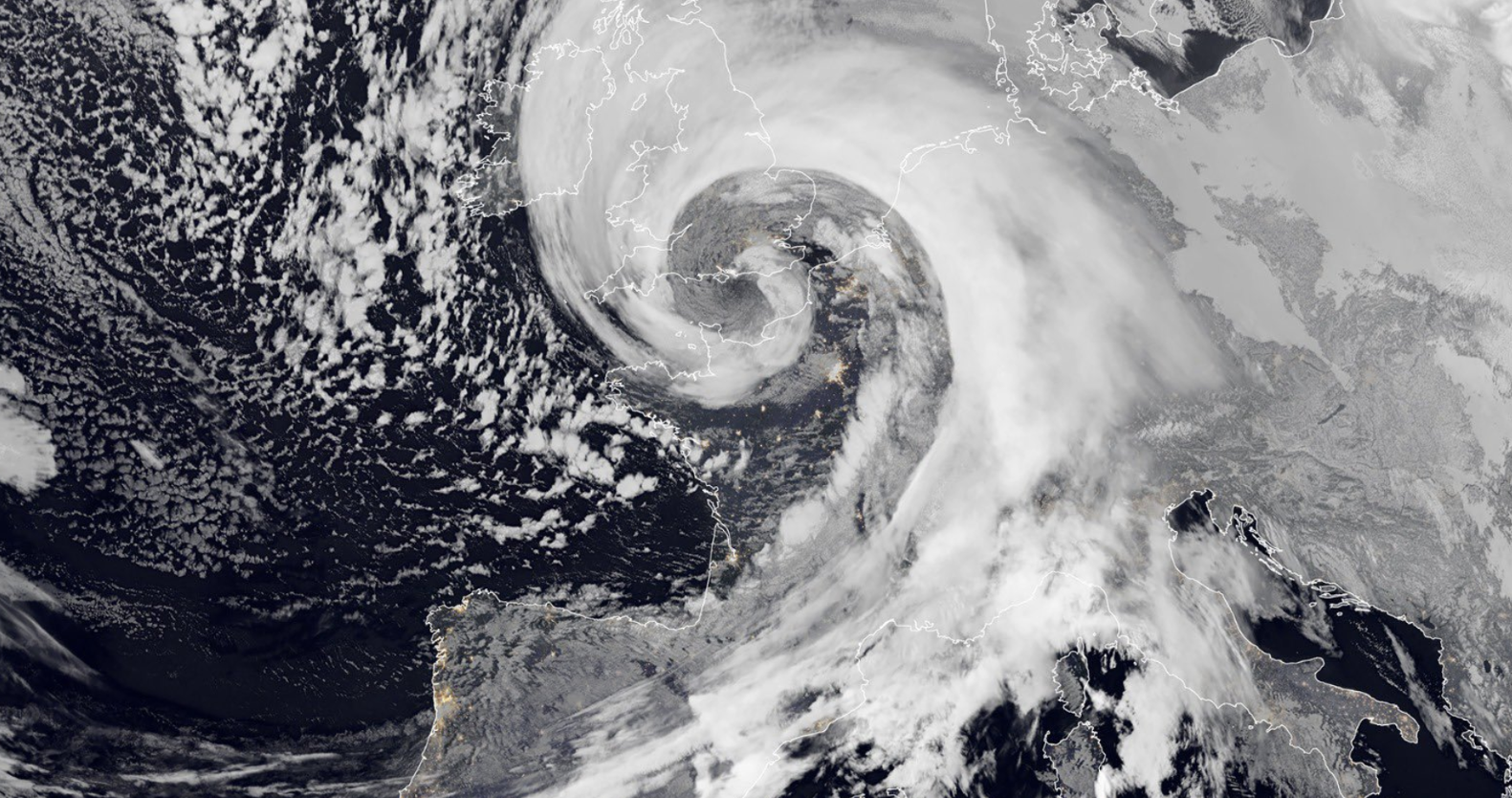 My early research focused on mid-latitude storms, which develop within upper-level jet streams through baroclinic instability. I analyzed the nonlinear interaction between the jet stream and depressions to understand the explosive growth of certain storms, such as Xynthia in February 2010. My work relied on a two-layer quasi-geostrophic model under the beta-plane approximation. Image: Storm Goretti (2025), Meteo-France.